Sunday, June 2, 2013

Is Hamlet Insane?

     A major uncertainty in Hamlet is whether or not Hamlet has actually gone crazy or if he is faking it. In my opinion, he is not truly crazy, despite what he is going through. He is in a position in his life where it wouldn't be too surprising if he went insane. His father just recently died and his mom married his uncle only a few weeks after. In addition to that, Polonius believes that Hamlet is lovestruck for Ophelia and has gone mad from that. Because Hamlet has a lot of issues going on in his life, people would easily believe that he has gone mad from these events, so he uses this to his advantage. 
     After talking to his father's ghost, Hamlet
is dedicated to taking revenge for his father's death. He would do anything to obey his father's word and kill Claudius--even pretending that he has gone insane. By making it seem like he has gone crazy from his love for Ophelia and the terrible situations that he is going through, people will be more understanding when he kills Claudius. If people didn't think he was insane, then they would think he killed Claudius for selfish reasons like taking over the throne. Instead, Hamlet cleverly took advantage of his position in life at the moment to make killing Claudius more acceptable to his community.

Sunday, March 24, 2013

Be content with your life

     Everyone seems to want a life they don't have. People would rather live in a hot climate if they currently live in a cold climate, and vice versa. If a girl has straight hair, she wishes to have curly hair. But the girl with curly hair would much rather have straight hair. No one is completely content with his/her life; there's always at least one aspect missing. For Sedaris, he had a seemingly perfect life, but he wasn't happy with it because it was missing the adventure aspect. Because he yearned for a little danger, he went to the extreme and wished to have Hugh's childhood, which was filled a little too much with abnormalities. There are millions of people who are living seemingly adventurous (but actually terrible and dangerous) lives that would love to have Sedaris' safe, normal life.

     I do see where Sedaris is coming from, though. When I look back on my childhood, the most exciting memory was a trip to Greece, so I can relate to his desire for more adventure. But that doesn't mean I can naively assume that a crazy childhood like Hugh's is only filled with fun adventures and exciting stories. His childhood was actually pretty miserable, and only people who have experienced similar things as he did would know that. This is why I constantly try to remember how blessed I am to have the life I do. You can't start wishing you had a different lifestyle, because you don't know what people in that lifestyle actually go through. So instead, it's important to be happy with the life you do have.

Sunday, March 17, 2013

Take Risks with Caution

     Some great points were brought up in Chet Raymo's "A Measure of Restraint". He wants it to be known that searching for new scientific discoveries can be dangerous, so it is important to be very cautious in these situations. What Raymo wasn't trying to do was warn against taking risks; he just wants people to restrain themselves when taking these risks in order to prevent dangerous situations. In the essay, he started off by telling the story of the Brazilian kids who died and many others who got sick from playing with the blue cesium powder. There have been too many incidents where people get hurt or even die from science-related situations simply because of carelessness, so Raymo is trying to put an end to this.
     He is basically saying that we can take risks, but we can't be careless when doing so. If you want to go skydiving, you have to take the leap, but it's still important to remember the instructions and be cautious of what you're doing. Life is all about putting yourself in a position that is a little out of your comfort zone, but then restraining yourself from going too far. And by remembering this, this is how our society has come so far, not only scientifically, but in every aspect of life.

Sunday, March 10, 2013

Money and Happiness

     This week we read "On the Want of Money" by William Hazlitt. This essay focused on how miserable a life in poverty is. I thought this to be a little odd because instead of saying how money shouldn't be a priority in life, Hazlitt focuses on the importance of money and says, "Literally and truly, one cannot get on well in the world without money." Although saying how crucial money is sounds a little shallow, it is very true. You can't do all the things you love without money. This made me think back to the video we watched about pursuing directions in life that you would enjoy instead of choosing a path solely for the money. To make money, you usually have to be very skilled in a certain field. And to master a skill, you have to love it and want to improve on it. If you choose to do something you enjoy and work hard at it, even if you think it will be a poor-paying job, you can become a master at it and it could end up earning you more money than you expected. And when you have more money, you can do even more things that you love and make you happy. It all loops back around and continually fills life with happiness.
     Going into senior year, I have to make decisions pretty soon on what I want to do the rest of my life.  For so long, I've wanted to become an architect because it is a field that I've always really loved. Lately, I've been thinking about the money aspect of it; architecture is not usually a job that earns a ton of money. I started questioning if I still wanted to do it and started considering pharmacy, but that is something I know I'd not enjoy doing my whole life. I am now back to architecture, and who knows? Maybe I'll become a famous architect and earn 5 times as much money as pharmacy could ever earn me.

Sunday, March 3, 2013

Your Safety or Making no Judgements?

     Brent Staples' essay, "Black Men and Public Space", is one of the most relatable pieces we've read so far, in my opinion. I don't exactly relate to Staples in many ways, but I, as sad as it is, can relate to the white people who get nervous around him. This is such a great example of how stereotypical and judgemental our society is, despite how much we say that everyone is treated equally. In class, so many of us brought up how we tend to get nervous for our safety around "creepy" older men or homeless people sitting on the street. But why do we judge someone so quickly just by looking at him/her and automatically assume we aren't safe near that person? All we know about this person, who we are making a huge assumption about, is what they look like. How do we know that this person could put us in danger if we know nothing about their past or their personality? Staples gave many examples of people assuming, based on his appearance, that he is a burglar or that he will harm them, when, in reality, he is timid, gentle, very educated, and a successful writer.
     The reason we tend to make these judgements is because we, as humans, have a natural tendency to protect ourselves. We have experienced and heard multiple stories of homeless people pickpocketing, girls getting assaulted by older men on dark streets, or black men robbing a bank. Because we know what could happen, we take more precautions so nothing bad will happen. And because we want to remain safe, we make quick judgements. So what is more important? Your own safety or not making assumptions based on appearance or stories you've heard? I want to say the second option because it is the more selfless of the two, but it is something our whole society needs to work toward.

Sunday, February 24, 2013

Different, but the Same

     "Shooting Dad" by Sarah Vowell was all about the major differences and surprising similarities between Vowell and her dad. You would think that a gun-loving Republican and an art-loving Democrat would have no similarities, and that is what Vowell assumed, too. She spent most of her life arguing with her dad, so she was convinced that they would never have anything in common. It wasn't until she made an effort to appreciate her dad's differences and put herself in his shoes that she found how much alike they actually were. They are both "smart-alecky loners with goofy projects and weird equipment," but they just have different types of projects and equipment. This relationship proves that two completely different people can be essentially the same. The essay assures people that there is the possiblility of finding a similarity in one of their own incompatible relationships.
     When reading this essay, it reminded me of the movie, The Parent Trap, in which a pair of twins who were separated at birth reunite at summer camp. Hallie and Annie have completely different personalities, live across the world from each other, and have different interests. They even dislike each other at first and try to get under each others' skin, just like Vowell and her dad. Eventually, Hallie and Annie get to know each other and decide to switch places when they go back home. It wasn't until they put themselves in each others' shoes and make an effort to learn more about each other that they get along with each other and find how similar they are. Therefore, if one ever finds himself in a relationship where everything clashes, it is important to step in the other's place, because there is assuredly a similarity that can be found.

Sunday, February 17, 2013

Appreciation

     Reading "Arm Wrestling with My Father" by Brad Manning, it really got me thinking about how important it is to appreciate family relationships. As a kid, Manning never really understood the way that his father showed his love to him. When he was finally strong enough to beat his dad in the arm wrestling match, he realized that he didn't want to see his dad lose because that would mean he's getting old and losing strength. That was the moment he fully realized how much his father has done for him, such as carry him upstairs when he had mono, and, at that moment, he found how much appreciation he had for his father.
     As everyone's lives get busier and busier, it becomes harder to always remember to appreciate everything your parents do for you. I am so fortunate to have such caring and supportive parents, but not everyone is, and I've realized that I take them for granted a lot of times. Even if they get mad at me or I get frustrated with them, I've learned how important it is to give them my full appreciation because everyone shows love in different ways. Manning's father showed his love in a more physical manner, whereas one of the ways my parents show their love is by being very concerned about my future. There is not one way to love, so I know it is crucial to appreciate every version of love my parents show me.

Sunday, February 10, 2013

Your Culture is Forever

     While reading "Fish Cheeks" by Amy Tan, I found myself relating her story to my life. I have never had an experience exactly like Tan's, but I have been in situations where my culture or family came in contact with other aspects of my life. What "Fish Cheeks" teaches people is that one's culture is more important than anything else in life. Amy was embarrassed by her family and her Asian foods and traditions; she was focusing on what negative thoughts people would have about them. It is crucial to remember that your culture and family are basically the only things that will be with you your whole life.

     There are constantly oppurtunities in my life when I must choose to either be ashamed of my family or culture or to take pride in them. For example, my mom might do something embarrassing in public, but instead of getting mad or feeling humiliated about it, I simply don't mind. I always try to remember that everyone in that public area is very temporary in my lifetime, but my mom will always be my mom and will be with me the rest of my life. If you love and accept your culture and family, then you'll find that others' approval of it won't matter. At the time, Tan didn't realize that Robert and his family would only be in a short part of her life, unlike her Asian culture and her family, so it wasn't necessary to try to please them over taking pride in her roots. Therefore, in choosing how to act in situations, everyone should remind themselves of what is truly important and will be a part of them their whole lives-- family and culture.

Sunday, February 3, 2013

Nothing is Guaranteed

     Last week, we read "Champion of the World" by Maya Angelou, which depicts a childhood memory of Joe Louis winning the championship match. Although Louis became the champion and proved that African Americans were the "strongest people in the world," they didn't automatically gain equality and safety. This has further opened my eyes to the fact that life is all about taking one step at a time. This was a huge step for African Americans because it proved that they were at least, and even more, capable of the same things that whites were capable of. Just because they proved this, that didn't mean that the white population would quickly decide to accept them and treat them equally. They needed to take it step by step, which they did, and they gained their equality.
     This idea is found everywhere in everyday life. For example, getting a perfect score on a test in a class doesn't automatically guarantee an A for that semester. You have to keep working for that grade and pass each test and project one at a time. As I was watching the Superbowl, I noticed this concept occurring. Although the Baltimore Ravens scored the first touchdown, they needed to keep working and take it play by play, because their win wasn't certain until the last second of the game. No one is assured of anything in life, so it's important to keep in mind that one small victory doesn't guarantee complete victory, but it can be achieved through taking one step at a time.

Sunday, December 16, 2012

How to keep a family from falling apart

     As we read A Raisin in the Sun this week, my thoughts kept jumping back to the fact that this whole book wouldn't be anything without the death of Big Walter. Because of all of the work Big Walter did while he was alive, his family members got $10,000 to spend as they wanted once he died. It wasn't until the end of the book that the family even brings up how grateful they should be towards all the work their father did for them. This frustrates me because all Big Walter did was work for his family, and once he died, it seemed to me that all they cared about was the money and how to spend it, rather than taking time to appreciate the man who earned the money for his family that he loved. Because of the money, the family seemed to be falling apart more and more; most of the book consisted of arguments between family members.
     This reminds me a little bit of what's going on in my family. My grandpa died a couple years ago and my dad and his sisters had to divide up all of his belongings. There were a lot of times when my aunts would get in fights over who would get what stuff. It never got too bad, but they were arguing nonetheless and this is definitely not something my grandpa would've wanted to happen because of his death. He would've wanted his death to, if anything, bring his kids closer together, rather than make them argue over how his money and belongings would be split up. Relating my family's situation to the Younger's situation, I've realized that what's important is, not the money and material items, but keeping the memories, stories, and morals of the one who died alive. Focusing on these ideas will bring a family closer together instead of tearing it apart.

Sunday, December 9, 2012

A Dried Up Dream


     During this past week, I've really thought in depth about dreams. In Langston Hughes' poem, "Harlem", he refers to the dreams of African Americans and what happens if dreams are put aside. He compares this to a raisin drying up in the sun-- it festers, stinks, crusts over, sags, and could even explode. When one forgets, loses, or puts off a dream, it will have a torturing effect like a raisin that dries up and "[stinks] like rotten meat." Although it may seem easier to just give up on a dream, the poem suggests that this action would be a burden on you by saying "it just sags like a heavy load." To some people it may not make sense that a dream that is out of your way is actually quite a burden, but it in fact is because this forgotten dream is holding you back from complete happiness. The last line of the poem says that the deferred dream could explode. This suggests that not pursuing your dreams could negatively affect not only yourself, but many people, just like an explosion. For example, if your dream is to put an end to poverty and you don't even give it a chance, then you're letting down everyone who is in poverty. A dream that isn't pursued makes you one step further from your idea of a perfect life.
     So, is it better to set off a dream and let laziness take over or go after your dreams at risk that they may not end the way you planned? After reading this poem, I am positive the best action to take regarding your dreams is to chase them. If you put off a dream because of the fear that it will end in disappointment, you're not giving your life the chance it deserves. It's important to at least try to achieve your dreams, because you never know where it could lead you.

Sunday, December 2, 2012

We are people who we aren't

     In our critical world, it is very rare to find someone who is always true to his/her real self. It sounds cliche, but it is true that the majority of people make most decisions based on what would please others. This happens so much to the point that it takes over our lives; most of our lives are spent working to convince others that we are someone we aren't. We see this happen in The Great Gatsby through Gatsby's character.
     In Gatsby's case, he worked his whole post-war life to be wanted and loved by Daisy. All he wanted in life was to be with her, so he went to extremes to get her. Gatsby was a poor young man with no connections to wealthy people when he met and fell in love with Daisy, who was rich. After coming back from war and learning that she was married, Gatsby illegally sold alcohol to earn all his wealth, bought a glamorous mansion across the water from Daisy, and held huge parties in order to be the man that Daisy wanted. In the end, his closer connections with Daisy killed him, which shows how changing who you are is not worth it. In today's society, we see people changing to be accepted by others all the time. Whether it's by wearing certain clothes, listening to certain music, saying certain things, or doing certain actions, everyone seems to be a little fake.


     It escapes me why people think that the only way to be happy is changing themselves to be accepted. We don't owe anything to people who are going to only accept us if we fit their standards of living, so why try to please them? On the other hand, we owe everything to ourselves; the least we can do for ourselves is stay true to who we are so our lives don't go to waste.

Sunday, November 25, 2012

Is innocence greater than knowledge?

     On Monday, we discussed the poem "The History Teacher" by Billy Collins. I really liked this poem because it was fun and unique, but it also taught a very valuable lesson. It was about a teacher who taught his students less harsh versions of historical events to "protect his students' innocence." The teacher is happy with how he's teaching and he thinks he's doing the right thing for his students, but all he is doing is making them think they live in a perfect world. This poem teaches about the idea that if people aren't taught about past mistakes, then history will repeat itself.
     The worst part of this situation, in my opinion, is the fact that the history teacher finds nothing wrong with his teaching. In the last stanza, it says he "walked home past flower beds and white picket fences." This is saying that he is in his own little perfect mindset. He is completely oblivious to the damage he is creating for the future generation; he is even proud of what he is doing. The teacher finds the kids' innocence more important than their correct knowledge of history's experiences. Although, to some extent, children should live their youth without worries, they need to understand what our world has done wrong in the past so that their generation will know what not to do. It is really just important to keep stories and historical knowledge alive, which is what Harriet Jacobs did by writing about her experiences as a slave. In the long run, knowledge of the past will be much more valuable and important than innocence as a child.

Sunday, November 18, 2012

Death and Life

     This past week, we read a few poems by Emily Dickinson and Walt Whitman. I thought I knew all there is to know about death, but these poems have opened my eyes to what death really teaches us about life.
     In Dickinson's poem, "Because I could not stop for Death", death is personified as a polite and kind carriage driver. This is unusual because most people would never think of losing someone they love to death in a positive way, but what Dickinson is expressing in this poem is that death is, although an ending to a life, the start to peaceful immortality. Another one of Dickinson's poems from a different point in her life, "My life closed twice before its close", shows her more negative view of death. This poem is about how she felt as if she died inside twice because of losing loved ones to death. It teaches that death really causes more pain for the ones who remain alive than it could ever cause for the one who died. In "Success is Counted Sweetest", it doesn't seem like it's about death, but it can relate to a lesson that death teaches. This poem is about how you don't know what success is unless you've never had it. This reminds me of the idea that you don't know what you have until it's gone, which teaches us the importance of making that most of the time we have on this earth. In Whitman's "Song of Myself", he discusses how death is natural and leads you back to where you came from, which is nature. It teaches us to accept that fact that death will occur and to enjoy life while we can, instead of worrying about dying.
     I have never looked at death so carefully as I have reading these poems. I understand and accept death more, both in a positive way. In short, death teaches us that there is eternal life in immortality, it is more painful living through others' deaths than actually dying, it is important to live life to its fullest, and it is even more important to enjoy life while you can.

Sunday, November 11, 2012

The Effects of a Secret

     As we finished reading The Scarlet Letter this week in class, I've been really thinking about secrets and their effects. What I've concluded through what we've discussed in class, including the PostSecret blog and connections to The Scarlet Letter, and what I've thought about on my own time, is that secrets are not meant to be held in.
     In the novel, we see the effects of secrets in Dimmesdale's character. As the whole community knows about Hester's adultery, no one knows that Dimmesdale is the one who she committed it with. It is obvious why Dimmesdale wants to keep his sin a secret; he is the minister and would be the last person anyone in the community would expect to commit this sin. Although keeping this secret upholds his respectable position, it really doesn't do him any good because his whole inside is being eaten up by guilt, shame, and weakness. Just because Dimmesdale decided to keep his secret in, he has created a mental downfall for himself.
     As I was thinking about secrets, I remembered an old Disney channel movie called Little Secrets. This movie is about a girl named Emily who is a "secret-keeper" and charges neighborhood kids 50 cents to relieve themselves of a secret they've been keeping. All the kids are fine because they aren't holding their secrets in, but Emily doesn't have anyone to tell her deepest secrets to. She eventually breaks down and her dreams are almost crushed. This is just another example of how secrets shouldn't be held in. In class, we discussed the PostSecret blog, where people can send in post cards with their secrets on them. The man who created this is amazing because what he has done has saved millions of people from experiencing their inner downfall and from holding in their pain any longer. Keeping a secret might seem like the right thing to do, but, in the end, all it will do is cause inner pain and most likely create a mental and, in Dimmesdale's case, also a physical downfall.

The trailer for Little Secrets:

Sunday, November 4, 2012

The Effects of a Decision

     Reading The Scarlet Letter this week, I've realized that one decision you make can affect your whole life, in either a good or a bad way. Hester Prynne decides to commit adultery with Dimmesdale and, because of her sin, she is forced to wear the scarlet letter on her chest her whole life. This action she took ended up giving her a huge amount of ridicule and hate. It also affected her life in other aspects, such as almost not being able to keep custody of her own child. Hester's decision has made her life much more difficult, but she doesn't regret it and she stays strong. She even wears her scarlet letter almost proudly to prove she doesn't regret her relationship with Dimmesdale.
     Although Hester's life is filled with ridicule for a long time, after a while, she gains respect from some of the community. She becomes more active in society and does much to help the poor and sick. Society reinterprets the meaning of the scarlet letter as "able" rather than "adultery". Hester has proved that she is strong enough to overcome the hatred and even give back to her community. In this sense, her past choice has a positive effect on her; it gives her strength and motivation to improve.

Sunday, October 28, 2012

Transcendentalism: Giving Life a Purpose

     We started reading transcendental pieces of literature this week, and these pieces have really created an impact on me. Although I already knew that everyone should be themselves, transcendental literature stresses it even more, and it actually made me feel more determined to follow my own beliefs and not anyone else's. Sticking to your own ideas and feelings gives life a purpose. Without this, you are not being your true self and you end up living a life without value.
     Some pieces we read that really enhanced my views on individualism were "Self-Reliance" by Ralph Waldo Emerson and Anna Quindlen's Commencement Address. Both were filled with many aphorisms that got me thinking. One of my favorite statements in "Self-Reliance" was, "the great man is he who in the midst of the crowd keeps with perfect sweetness the independence of solitude." I really like this quote because Emerson is saying that it is easy to give in to others' opinions, but what makes a person truly great and purposeful is when he has the ability to stick to his own values when surrounded by the strong influence of the world. In today's society, it is so easy to wear certain clothes, do certain activities, or say certain things just to fit in with everyone else. If you're doing these things just to make everyone else happy, then you probably aren't truly happy with yourself, and what is the good in that? In Anna Quindlen's speech, she says, "if your success is not on your own terms, if it looks good to the world but does not feel good in your heart, it is not success at all." She is stressing the importance of achieving your own personal goals, instead of just trying to achieve the goals that seem right in society. What really gives life a purpose is doing things that are important to you, because when you do what feels right in your heart, then you will do it with so much more passion and confidence.

Sunday, October 21, 2012

Individual Power

     This week in class, we began reading historical writings that all related to the freedom and independence of our country. Before reading these, I thought that an individual could only hold power when a large group of people came together for one cause. For instance, if a person donates one dollar to feed hungry children around the world, it won't be able to feed every single child, but if everyone in the world donates a dollar, then all the children will have enough food. I have now realized that one person does hold power, which can, in many cases, be enough to greatly impact the people around him/her.
     This realization came through the writings we read, such as "The Crisis" by Thomas Paine, Patrick Henry's "Speech in the Virginia Convention", and the Declaration of Independence by Thomas Jefferson. These pieces of literature and many more writings each display how one person can make a difference. For example, Thomas Paine created an impact on the soldiers in the Continental Army. Washington made his troops read Paine's essay aloud in order to boost their morale and help them move forward in the war. Imagine if Paine never even wrote "The Crisis" and the soldiers all decided to give up on the war for independence. We would've lost the war and we'd probably still be under the control of Great Britain. What it comes down to is even if one person can't impact something to a huge extent, he/she can have an effect on something smaller, which can end up making a difference that is larger than life.

Sunday, October 14, 2012

One's Responsibility in a Community

     After finishing reading The Crucible by Arthur Miller this past week, we discussed the roles that the characters play in the community of Salem. John Proctor is a good, honest man who contributes to society by pointing out its flaws. In my opinion, one's responsibility in a community is to make an effort to improve it, and John Proctor does just that.
     Proctor pointing out Salem's mistakes is an effort to improve his community because he is trying to make everyone understand the terrible flaws of the witch trials and learn from them. He is continually trying to make things better in Salem, for example by exposing that the girls were just pretending to be possessed by the devil. Also, even though he knows it will ruin his good reputation, he admits to having an affair with Abigail in attempt to stop her rampage and to calm the hysteria. Proctor speaks up when he sees injustice, and he openly disagrees with Parris throughout the play. When in court, he refuses to blacken others names because he knows that it wouldn't be of any help to the community. Proctor has fulfilled his responsibility through all these attempts to improve the crazed community of Salem. Even though these efforts led to his death, he left an impact on the people of Salem by keeping his integrity with him as he died.
     John Proctor shares many similarities with Martin Luther King Jr. Both seeked to improve their community and made efforts to achieve their goals by speaking up against injustices. Although Martin Luther King Jr.'s cause was a bit different than Proctor's, as he was standing up against racial discrimination, they both were searching for the same outcome: a better world around them that doesn't punish the innocent or victimize without the right to do so. They both ended up improving their communities through all their hard work and left positive impacts that will be remembered forever.

Sunday, October 7, 2012

Mass Hysteria

     In class this week, we started reading The Crucible by Arthur Miller. I am really enjoying reading this play, not only because it is fun to read in class and the plot is intriguing, but also because Miller was inspired to write it through his own experiences during the Red Scare in the 1950's. Because he experienced mass hysteria during the Red Scare, which was similar to the Salem Witch Trials, this gives his piece a whole new dimension.
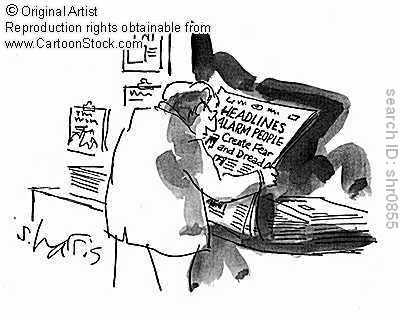
     During the Red Scare, which was when the United States had a strong fear of Communism, hysteria broke out and accusations were everywhere. Arthur Miller was one of the suspected Communists, so he got to experience first-hand the hysteria that was around him; he related it to what happened during the Salem Witch Trials. In 1692, many women were accused, with no solid proof, of performing witchcraft. Most of the accusations were just thrown out there because people were afraid that the devil was dwelling in their town. During both the Red Scare and the witch trials, many innocent people were punished just because fear infested these communities. This inspired Miller to write The Crucible and warn against mass hysteria.
     In my opinion, even though mass hysteria can be warned against, there is no way of preventing it. The basis of mass hysteria in a community is fear, and there is no way of changing what people are afraid of. If people are afraid of Communists taking over their country, then they'll panic because it's all they can think to do. If people are afraid that the devil is performing acts in their town through witches, then they are going to freak out because they don't know how to react. It is like a domino effect; once the fear starts, it continues to grow and people are knocked down one by one. The fear aspect of mass hysteria cannot be changed; fear will always be a part of humans. What can be improved are the reactions that people have to their fear, and this is what could lessen the negative effects of mass hysteria.